When the term "growth factor" is mentioned, most of us likely picture a laboratory or a biology textbook rather than a serum sitting on a nightstand. Yet, this represents one of the most fascinating chapters in modern skincare—a topic that aligns with the Yage philosophy far better than one might initially think. Let’s explore what growth factors actually are, how they work, and why they play such a vital role in a well-crafted cosmetic formula.
What are growth factors?
Growth factors are proteins that our bodies produce naturally—and the skin is no exception. Their role is to transmit instructions to cells: when to divide, when to regenerate, and when to begin building a new network of collagen and elastin. They act as tiny messengers, binding to receptors on the cell surface and triggering a cascade of internal processes.
Two types play a particularly crucial role in the skin: Epidermal Growth Factor (EGF), which regulates the renewal of the skin's upper layers, and Fibroblast Growth Factor (FGF), which supports fibroblasts—cells located deep within the dermis that produce collagen and elastin. While other, lesser-known variants exist (such as VEGF, which is involved in the formation of tiny blood vessels), EGF and FGF are the most significant for skin health and beauty.
As we age, the natural production of these factors declines—noticeably so after the age of twenty-five—causing the skin to gradually lose its ability to regenerate quickly and effectively. Wrinkles become harder to smooth out, healing takes longer, and elasticity diminishes. This is where skincare products come into play.
How growth factors work on the skin
When a growth factor in a serum or cream reaches the skin's surface, it binds to a specific receptor on cells in the epidermis or dermis. This triggers a biochemical signal that "awakens" the cell into action. In practice, this means:
accelerated cell renewal – the skin replaces old, tired cells with new ones more quickly,
stimulation of collagen and elastin production – the fibers that keep the skin firm and elastic,
support for the production of hyaluronic acid and other components of the extracellular matrix,
soothing and healing support – which is why growth factors are also used after treatments like microneedling or laser therapy.
It is important to note that growth factor molecules are relatively large and cannot penetrate deep into the skin on their own. Therefore, high-quality formulations combine them with carriers and accompanying substances (such as peptides, liposomes, or fermented hyaluronic acid) that help transport them to where they need to work: the basal layer of the epidermis and the fibroblasts in the dermis.
Precisely because of the size and delicate stability of intact proteins, the cosmetic industry often turns to an alternative solution: growth factor precursors. These are significantly smaller molecules—usually short peptide chains or amino acids—that retain the key information needed to trigger the same response. Thanks to their small size, they penetrate the skin more easily than whole proteins; once there, they act as "building blocks" or triggers, enabling cells to synthesize and produce the necessary growth factor themselves. Instead of delivering a finished protein from the outside, the formula provides the skin with the stimulus and raw materials to largely produce it on its own. They combine superior skin penetration with the utilization of the skin's own biosynthetic capacity.
Unlike more aggressive active ingredients, growth factors generally do not irritate the skin. They work with the body rather than against it. They mimic signals the skin naturally produces, simply boosting them when natural levels begin to decline.
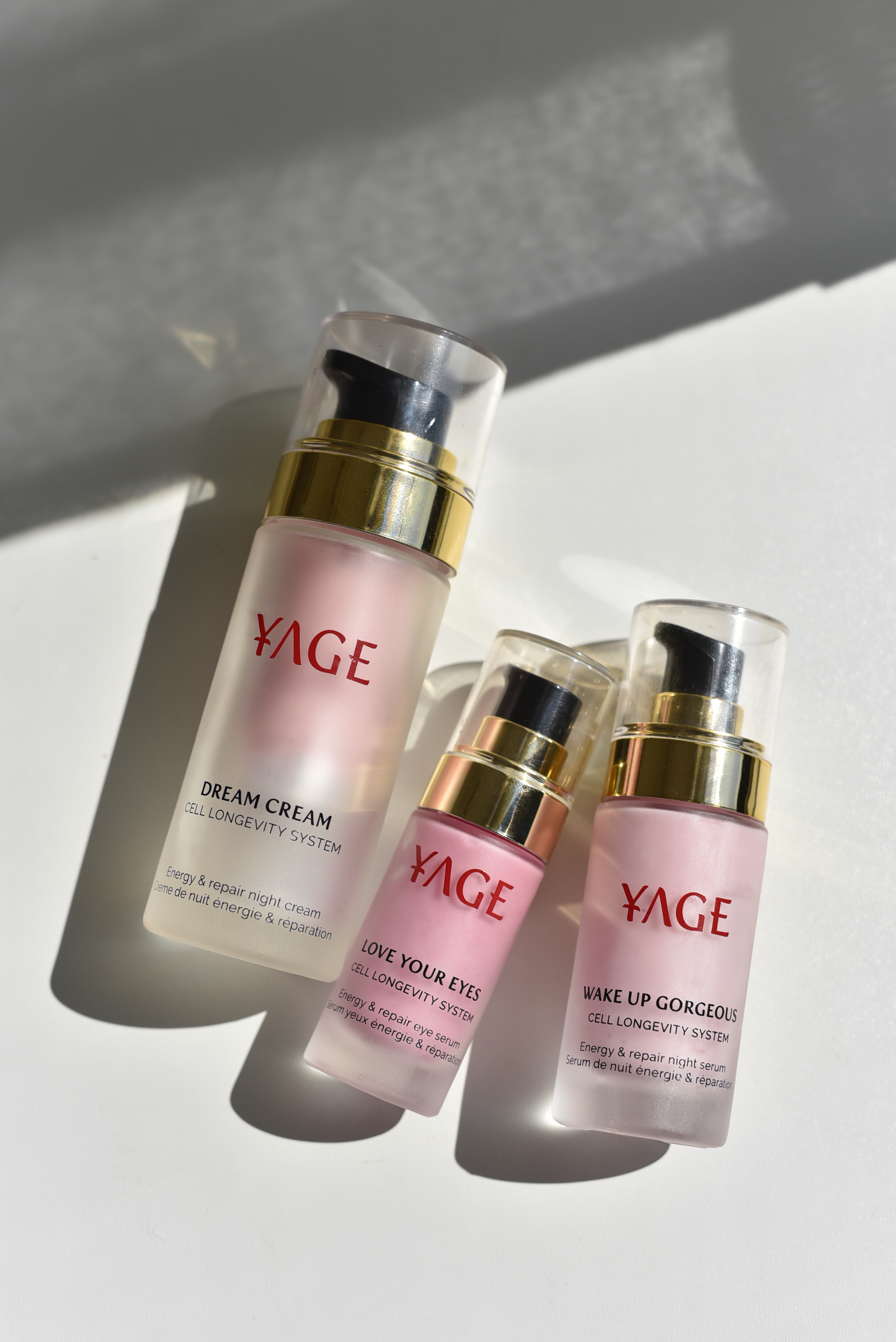
We have focused on growth factors in our new night-time skincare range, which we will be introducing very soon. It features a potent formula and delivers tangible benefits you can feel on your own skin. The range includes a night serum, an eye cream, and a night cream.