
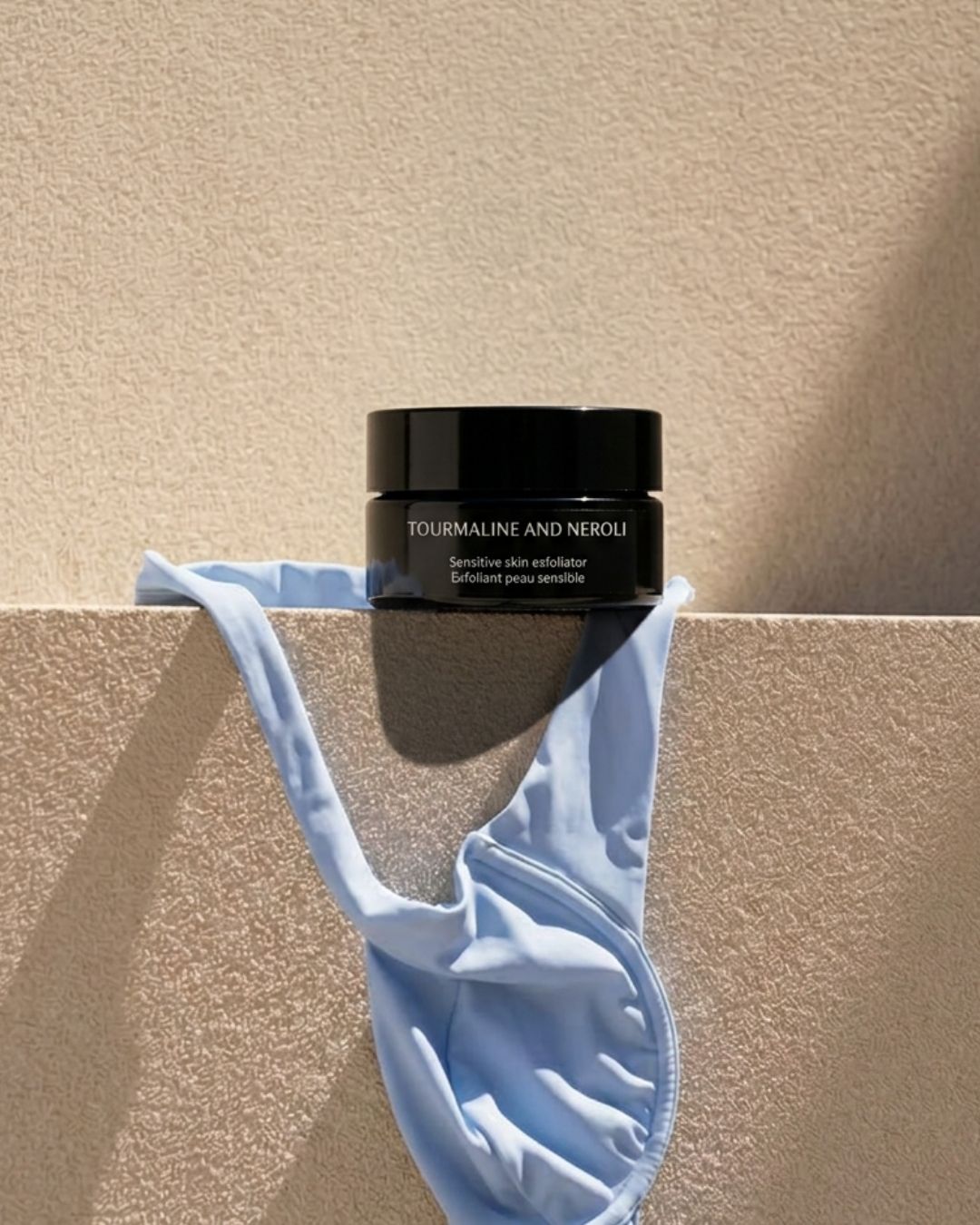
Summer is a season when our skin lives an entirely different life than the rest of the year. Sun, heat, sea water, chlorinated pool water, sweat, increased sebum production — all of this leaves its mark on how the skin looks and behaves. Dead skin cells build up faster, pores clog more easily, and the complexion can start to look tired and dull. Regular exfoliation is therefore just as important in summer as it is in winter — but the way we do it should be different.
Why chemical peels aren't always the best choice in summer
Chemical peels with AHA acids (glycolic, lactic, mandelic, and others) are popular helpers for removing dead skin cells. They work by loosening the bonds between cells on the skin's surface, making them easier to shed and leaving the complexion smoother and brighter. But here's the catch: AHA acids increase the skin's photosensitivity — its sensitivity to sunlight. The newly exposed, fresh layer of skin is more vulnerable and more prone to UV damage.
In practice, this means a higher risk of sunburn and irritation, premature sun-induced aging, and above all pigmentation spots, which form much more easily in summer and are harder to fade afterward. Even if you apply SPF after a chemical peel (which you always should), you don't eliminate the risk entirely — sun exposure in summer is simply more intense and longer-lasting than during other months.
Mechanical exfoliation as the summer alternative
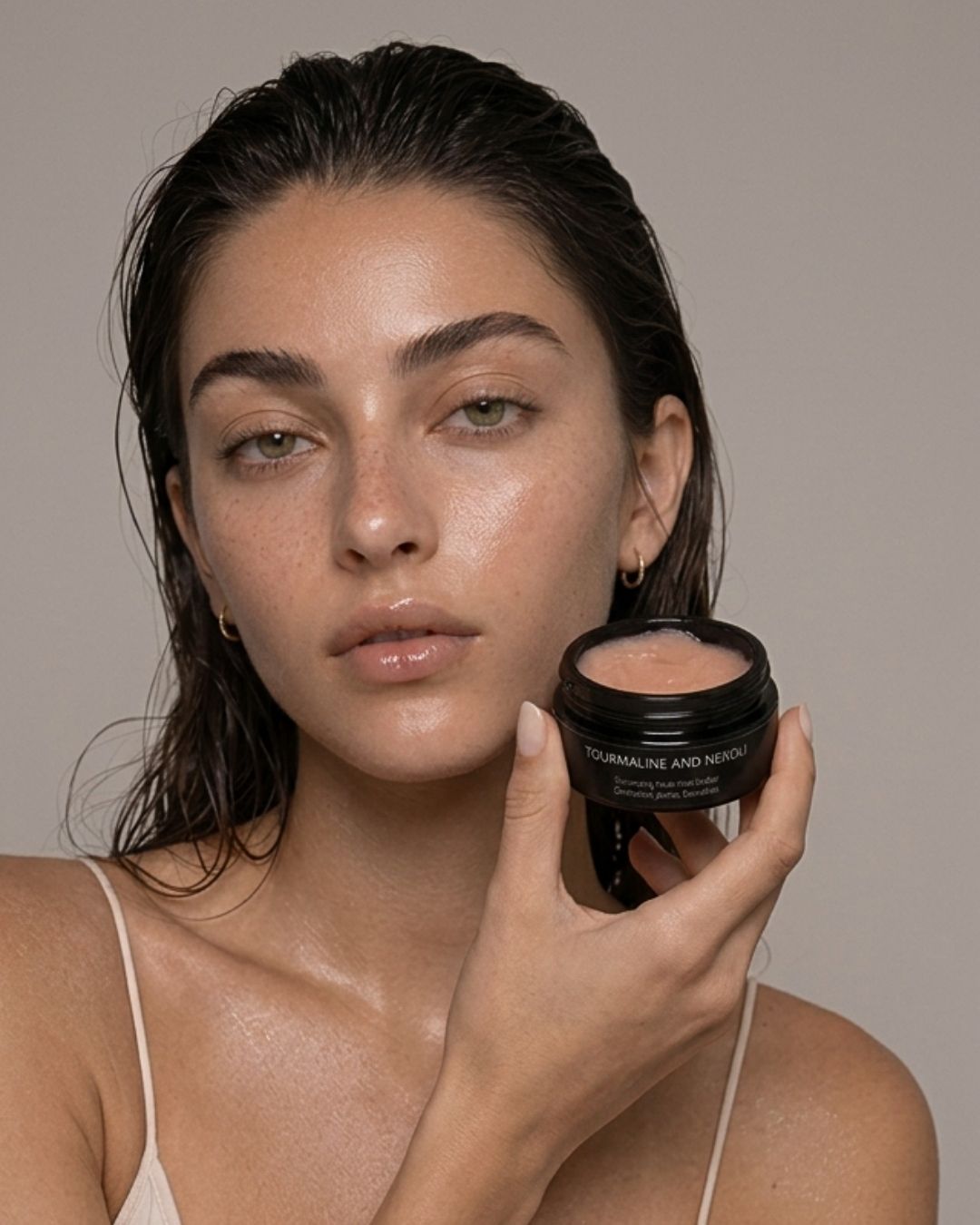
That's exactly why, during the warmer months, we recommend choosing mechanical exfoliation over chemical exfoliation. A mechanical peel removes dead skin cells through gentle physical action — small particles or the texture of the peel are massaged across the skin's surface and lift the dead cells away. This means the skin doesn't end up as exposed and sensitive as it does after a chemical treatment, and the risk of photosensitivity is significantly lower.
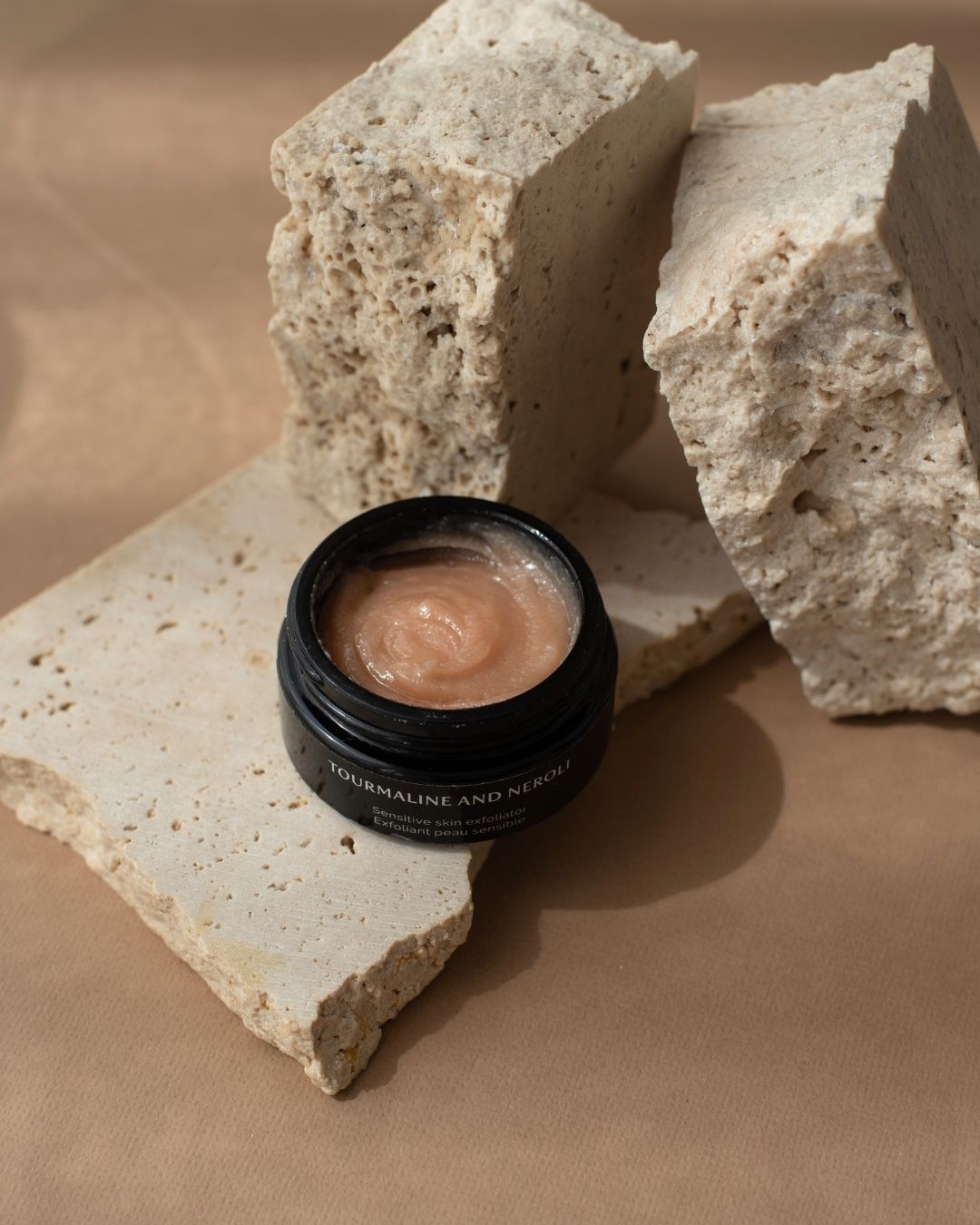
This is precisely the purpose our Tourmaline & Neroli Peeling was made for. It combines the gently mechanical action of micro jojoba beads, which delicately remove dead skin cells from the surface of the complexion and leave it soft and smooth without irritation. The result is skin that's smooth, clear of blackheads, and better prepared to absorb the care that follows — without risking irritation or pigmentation.
How often to exfoliate
The right frequency depends on your skin type, but as a general rule:
- Normal to combination skin – mechanical exfoliation 1–2 times a week
- Sensitive skin – once a week is enough, ideally in the evening, when the skin won't be exposed to the sun
- Oily skin prone to clogged pores – can often handle exfoliation twice a week, but always watch how your skin responds
Always exfoliate in the evening or at a time when your skin won't be exposed to direct sunlight right after treatment. And even after mechanical exfoliation, don't forget hydration and SPF protection — freshly treated skin is always a little more receptive.
Why regular exfoliation is worth the attention
Regular exfoliation isn't just about the nice feeling of smooth skin. It brings a whole range of benefits that show up in both the appearance and health of your complexion:
- Brighter skin – removing dead cells instantly restores natural radiance and a fresh look
- Better absorption of skincare – serums, oils, and creams absorb far more effectively when there's no layer of dead cells standing in their way
- Prevention of clogged pores – especially in summer, when sweat, sebum, and sunscreen combine, exfoliation helps prevent blackheads and blemishes
- Support for natural skin renewal – regular, gentle stimulation supports cell turnover and, over time, contributes to firmer, healthier skin
- A more even skin tone – by smoothing out surface irregularities, skin appears more uniform and makeup (if you wear it) lasts better