
SPF protection in summer: what UV radiation does to the skin and how to protect it from the inside and outside
The sun is beautiful. But the skin knows it best — and remembers every day it comes without protection. Visible wrinkles, age spots, loss of firmness and elasticity. These are not just signs of age, they are the marks that UV radiation leaves behind, year after year, day after day.
The good news is that photoaging is largely preventable. And even better news: protecting your skin from the sun today does not just mean a white film of sunscreen. There is a sophisticated approach that combines external protection with internal reinforcement, and the result is skin that can handle summer with ease.
What UV radiation really does to the skin
To make sense of why and how to protect yourself, it is good to first understand what happens under the surface of the skin during sun exposure.
UV radiation is divided into two groups with different effects on the skin. UVB rays penetrate the top layer of the skin and cause acute damage — redness, burning, and direct damage to the DNA of cells. UVA rays are more insidious: they penetrate deeper into the dermis, where they work silently and systematically activate enzymes called matrix metalloproteinases, which break down collagen and elastin. The result is wrinkles, loss of firmness, and elasticity.
In addition, both types of radiation trigger the production of free radicals, unstable molecules that damage cell membranes, mitochondria, and DNA itself. This cumulative oxidative damage is responsible for what we call photoaging and, according to experts, accounts for up to 80% of visible signs of skin aging.
In addition, UV radiation stimulates melanocytes to produce melanin unevenly, which leads to age spots. Once formed, pigmentation deepens every summer without protection.
How to gradually accustom your skin to the sun
One of the biggest mistakes in the summer is sudden intense exposure after months without the sun. During the winter and spring, the skin builds up a lower level of melanin — its natural protection — and the first summer trip to the beach can be quite taxing.
Getting used to it should be done gradually:
Start by spending time in the sun in the morning or late afternoon (before 10:00 and after 16:00), when UV radiation is at its least intense. Limit yourself to 15–20 minutes for the first few days. Your skin will gradually start producing more melanin as its natural protection — and you’ll be protected by SPF in the meantime.
The riskiest hours are between 11:00 and 15:00, when UV radiation is strongest and the intensity of UVB rays is at its peak. During this time, it’s worth seeking shade, wearing a hat, and reapplying SPF every two hours — and after swimming or sweating heavily.
Skin that is well-prepared, hydrated, antioxidant-fortified, and gradually accustomed to the sun before summer. It responds to exposure significantly better and less damaged tissues at the end of the season.
How to strengthen the skin from the inside: astaxanthin and other internal support
SPF cream protects the skin from the outside. But there are substances that increase its resistance to sun stress from the inside as well — and astaxanthin is the strongest of them.
Astaxanthin is a red-orange carotenoid, naturally occurring in seaweed and microorganisms — it gives salmon and shrimp their characteristic color. In the body, it functions as one of the most powerful natural antioxidants ever: it is 6000 times more effective than vitamin C, 800 times more effective than coenzyme Q10 and 550 times more effective than vitamin E in neutralizing singlet oxygen.
For the skin, this means:
Neutralizes free radicals caused by UV radiation — protects collagen and cell membranes from oxidative damage
Reduces the risk of sunburn and accelerates skin healing after exposure
Reduces wrinkles and age spots with long-term use (clinical studies have shown visible results at 6 mg per day after 6-8 weeks)
Improves skin hydration and elasticity
Penetrates cell membranes — protects cells from the inside and out, unlike many other antioxidants
Other ways to support internally:
Dietary antioxidants — vitamin C (citrus, peppers, kiwi), vitamin E (nuts, seeds), lycopene (tomatoes, papaya), beta-carotene (carrots, sweet potatoes) — all of these substances strengthen the skin’s natural resistance to oxidative stress. Omega-3 fatty acids then reduce the inflammatory response after UV exposure.

External protection: how to choose and use SPF
However, daily application of SPF cream remains an absolute foundation — without it, no internal supplements have a sufficient effect.
What to look for when choosing:
Look for SPF 30–50+ with broad-spectrum protection (UVA + UVB). Mineral filters based on titanium dioxide or zinc oxide physically reflect the sun's rays — instead of being absorbed by the skin — and are therefore gentler on the skin and the microbiome. Chemical filters absorb sunlight and convert it into heat, which can irritate sensitive skin.
Apply SPF as the last step of your morning care, approximately 15 minutes before going outside. Reapply every 2 hours when outdoors, after each swim and after heavy sweating.
Yage protection and care in one
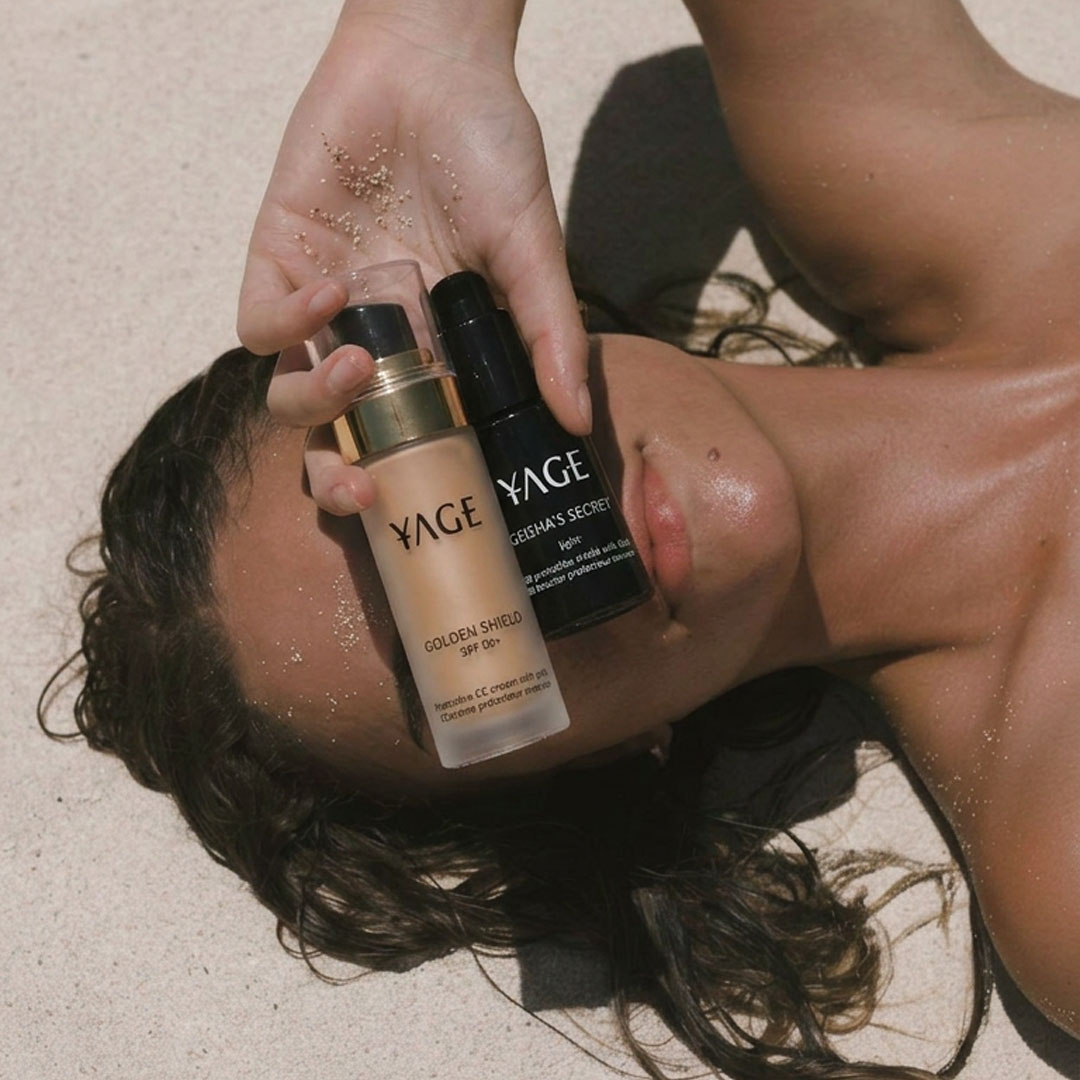
Yage Organics offers two versions of SPF protection — different for every day and every intensity of the sun:
Golden Shield — CC cream with gold and SPF 50+
Golden Shield is the choice for days with intense sun, outdoor sports or traveling. The mineral filter of titanium dioxide provides maximum physical protection SPF 50+ and unifies the skin tone like a light CC cream.
But the composition goes far beyond mere protection:
Colloidal gold supports regeneration, improves microcirculation and gives the skin a natural glow. Ectoine — an amino acid from sea salt — protects cells from UV stress and strengthens the skin barrier at the molecular level. Licorice extract (dipotassium glycyrrhizate) actively inhibits melanin production and lightens existing pigment spots. Buriti oil is rich in carotenoids and omega-9 fatty acids, which protect against free radicals and intensely nourish. Shea butter and baobab oil provide deep hydration and nutrition of the lipid barrier. Spirulina naturally supplies niacinamide, which strengthens the skin barrier and unifies the skin tone.
The result is skin that is protected, nourished and naturally radiant — not just covered in a filter.

Geisha's Secret — BB Cream with Gold and SPF 15+
Geisha's Secret is a lighter alternative for days with less sun exposure — working in the office, walking in the shade, cloudy weather. Same golden philosophy, finer texture and more natural coverage.
It shares key ingredients with Golden Shield — colloidal gold, licorice and ectoine — and adds red algae (Rhodophyta), which are a rich source of antioxidants and sea minerals that strengthen the skin barrier. Linden soothes and regenerates, Damask rose hydrolate gently tones and calms reactive skin.
How to combine them: Golden Shield for days outdoors, playing sports or traveling. Geisha's Secret for everyday use in the office or with moderate sun exposure. Both can be used alone as the final step of care — or applied over a moisturizing foundation for higher coverage.
After the sun: antioxidant regeneration with Golden Turmeric
Every day in the sun — even with perfect SPF protection — means a certain strain on the skin. Evening care after sunbathing or after a long day outdoors should therefore focus on two things: antioxidant neutralization of free radicals and deep regeneration.
Golden Turmeric — The strongest antioxidant balm was developed precisely for this purpose. It is based on a combination of camellia oil, shea and cocoa butter as a moisturizing base, supplemented with premium African oils — marula, baobab and murumuru, which deeply nourish and restore the skin barrier. The key antioxidant trio is sea buckthorn oil rich in carotenoids and vitamin C, rosehip extract that supports collagen production, and turmeric with anti-inflammatory curcuminoids, which actively suppresses the skin's inflammatory reaction after sun stress. Frankincense soothes redness, sandalwood and myrtle heal and provide antimicrobial protection.
Carotenoids act as one of nature's most effective antioxidants. They neutralize free radicals resulting from UV radiation and pollution, thereby protecting collagen and cell membranes from oxidative damage. As a result, they slow down photoaging, promote an even and healthy skin tone, and strengthen its natural resistance to sun stress. In addition, some carotenoids, especially beta-carotene, are partially converted into vitamin A in the body, which supports skin cell renewal and improves skin texture.
Summer routine in a nutshell: how to put it all together
Morning: Cleansing step → hydration (essence, serum) → Golden Shield SPF 50+ (intense sun) or Geisha's Secret SPF 15+ (moderate exposure)
During the day: Reapply SPF every 2 hours when outdoors. Internally: astaxanthin, vitamin C, plenty of fluids.
Evening: Thorough cleansing → active care → Golden Turmeric balm as a final antioxidant and regenerating step.